Youth led FRESHAIR4Life social media campaign in Karachi raises awareness of air pollution and health
Karachi, Pakistan: IPCRG has been supporting the social media campaign development of the five countries in the Horizon and UKRI funded FRESHAIR4Life implementation research programme. A six week social media campaign reached more than 300,000 young people in Karachi with messages about the health impacts of air pollution and practical ways to reduce exposure, as part of the FRESHAIR4Life project’s youth engagement activities.
The campaign ran from 13 August to 3 October 2025 and targeted adolescents and young adults aged 17 to 21 years through online platforms, recognising social media as one of the main channels through which youth access health information.
Partner organisations amplify youth focused messaging

Campaign content was disseminated through the official social media channels of partner organisations including The Initiative, Indus Hospital and Health Network, Indus Yaqeen, Voices Against Tobacco and the Indus College of Nursing.
Together, these platforms helped extend the reach of campaign materials and ensured consistent messaging across trusted health and youth focused organisations.
From awareness to action

The campaign focused on three main themes: exposure to outdoor air pollution, health impacts and youth action to bring change. Content was designed not only to explain risks but also to promote simple behaviours that young people could realistically adopt in their daily lives.
Materials included main videos, trailer videos, short clips and social media posters with basic motion graphics. Platforms used included Instagram for posters, stories and reels, YouTube for longer videos, TikTok for short content and Facebook for wider dissemination.
Monitoring relied on hashtag tracking and post level impressions rather than specialised social media analytics platforms.
Responding to a clear local need
Situational analysis conducted earlier in the project showed that many young people in Karachi had limited understanding of air pollution health risks and often viewed the problem as unavoidable. This sense of helplessness reduced motivation to adopt protective behaviours or engage in community action.
The campaign aimed to shift this mindset by improving knowledge, building a sense of agency and providing locally-relevant actions that young people could take to protect themselves and contribute to broader environmental change.
Reaching a wide audience
The campaign achieved impressive reach across Instagram and Facebook:
- Views: 400,000+
- Reach: 305,500+ unique users
- Interactions: 5,649 (likes, shares, comments, saves)
- Watch time: 12 days, 10 hours
What made the campaign resonate
Content that reflected everyday life in Karachi had the strongest impact. Seeing young people in familiar settings such as traffic congestion, college environments and polluted neighbourhoods made the messages feel real and relevant.
Videos were delivered in simple Urdu and Roman Urdu and ended with one clear and doable action. Short, visually strong content focused on a single key takeaway consistently achieved higher reach and engagement.
Peer sharing also played an important role. Adolescents actively reposted content within their own networks, expanding organic reach beyond the partner organisations’ followers.
- The air you breathe is harming you every day but you’ve stopped noticing (Instagram, YouTube)
- The second you inhale, the damage begins (Instagram, YouTube)
- Karachi’s youth are stepping up! (Instagram, YouTube)
Video production
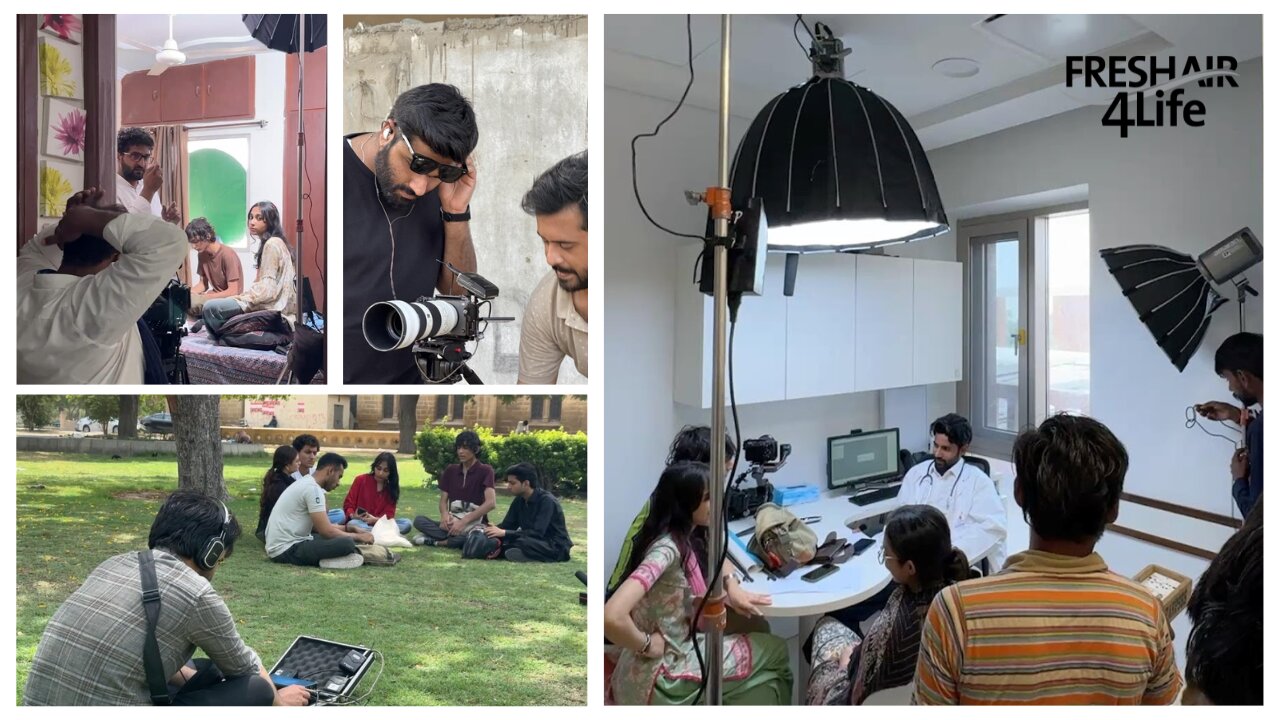
The FRESHAIR4Life campaign videos were produced with the voluntary participation of young performers, including trained theatre actors from the Arts Council of Pakistan Karachi. These youth were also members of the FRESHAIR4Life youth advocacy group and volunteered their time and creative skills to raise awareness and inspire action on air pollution in Karachi.
Video production was outsourced to a professional vendor based in Islamabad, while all filming was carried out in real-time settings across Karachi to ensure authenticity and local relevance. Community and outdoor locations were used, with all required permissions obtained from local municipal authorities, including approvals for drone footage. The process was highly collaborative, involving volunteer youth advocates, theatre actors, a professional production crew, drone operators, and the campaign communications team, ensuring strong youth representation alongside high technical and storytelling quality.
Adapting to real world disruptions
A major challenge was translating complex air pollution research into simple messages without losing accuracy. Draft materials were tested informally with adolescents and refined based on their feedback.
During implementation, floods in Pakistan disrupted normal social media use and shifted public attention. The team adapted by adjusting the content calendar and adding flood-related posts that linked air quality, health protection and environmental risks, while using selective boosting to maintain visibility.
Lessons for future digital health campaigns
The campaign highlighted the importance of combining a consistent behaviour change framework with strong local tailoring. Messages were most effective when grounded in daily realities, delivered in familiar language and linked to specific actions.
Involving adolescents in testing and sharing content improved trust, relevance and reach. Flexibility in planning and rapid feedback loops were also essential to respond to changing circumstances and online attention patterns.
Ali Kamran Baba, Communication Lead from the Pakistan FRESHAIR4Life team, commented: “Our campaign focused heavily on air pollution as a public-health challenge. Through videos, images and engaging posts, we aimed to show how everyday exposure affects health and the environment. Our messages were created with adolescents, not just for them, which gave them authenticity which resonated with our target audience. This approach can be a powerful, scalable intervention for other communities facing similar challenges.”
Looking ahead
Future campaigns could be strengthened by linking social media activities with schools, colleges and youth groups so that online messages are reinforced through in person discussions and projects. Establishing a youth advisory group would further strengthen ownership and relevance.
For wider scale up, longer campaigns and broader partnerships with climate and education platforms could expand reach. Content could also be adapted for other cities such as Lahore by tailoring stories to local pollution sources and youth cultures, supported by ongoing feedback to refine and improve impact.
FRESHAIR4Life is a four-year international research project that seeks to reduce non-communicable diseases (NCDs) by tackling two major risk factors: tobacco use and air pollution. The project spans several countries including Pakistan, Greece, Uganda, Romania and the Kyrgyz Republic with the aim of developing and implementing tailored prevention packages appropriate to each context.
The project is drawing to a close in January 2027 and will aim to share key findings in the coming months in published papers and summary documents. If you want to keep up to date with publications and news from the project please visit: https://www.ipcrg.org/freshair4life