FRESHAIR4Life: Helping adolescents say no to tobacco in Greek schools

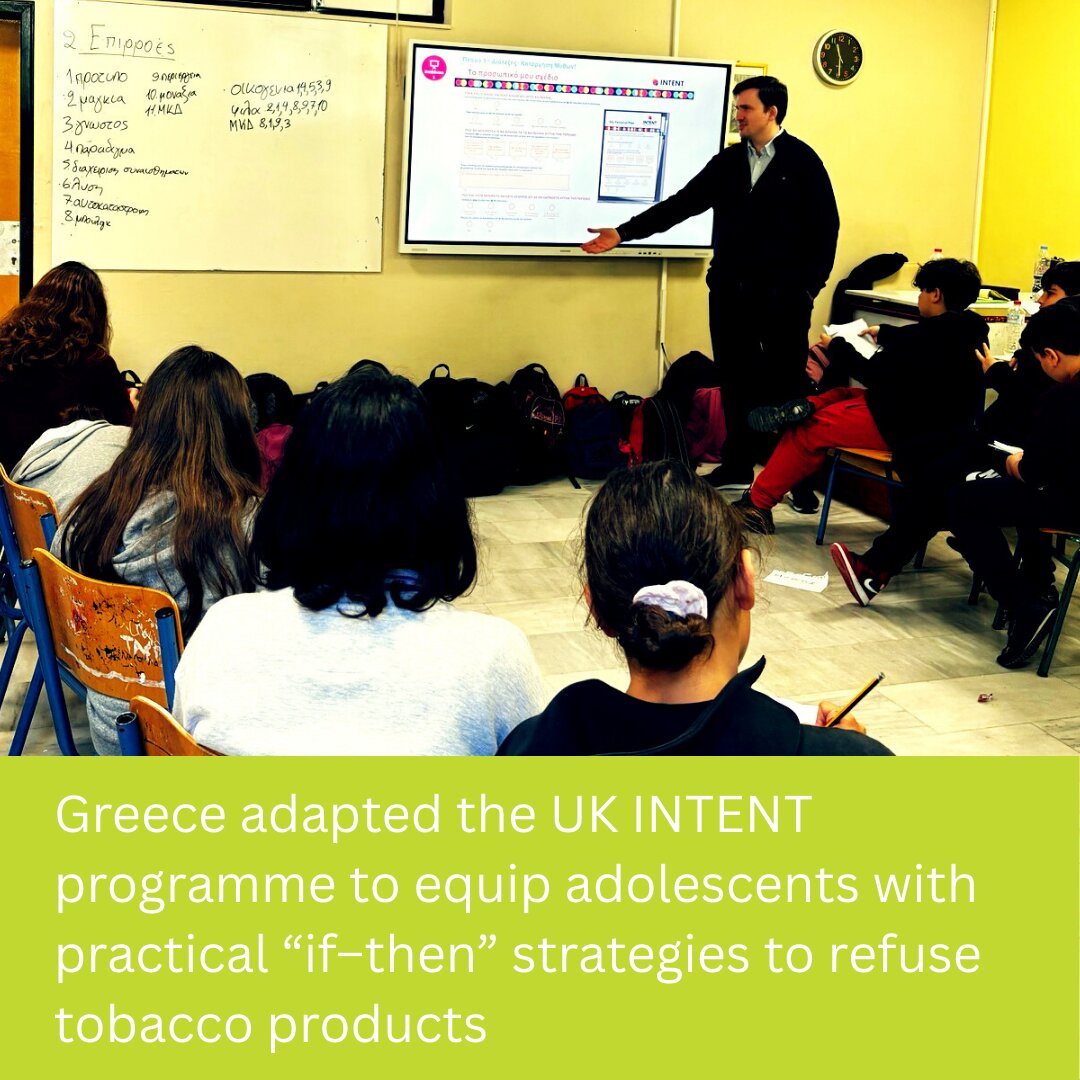
Heraklion, Crete: IPCRG has been supporting the social media campaign development of the five countries in the Horizon and UKRI funded FRESHAIR4Life implementation research programme. Schools in Heraklion have taken an important step toward preventing tobacco use among adolescents through a classroom-based intervention delivered as part of the FRESHAIR4Life project. The initiative adapted the UK’s INTENT smoking prevention programme to the Greek context and focused on helping students develop practical strategies to refuse tobacco when offered.
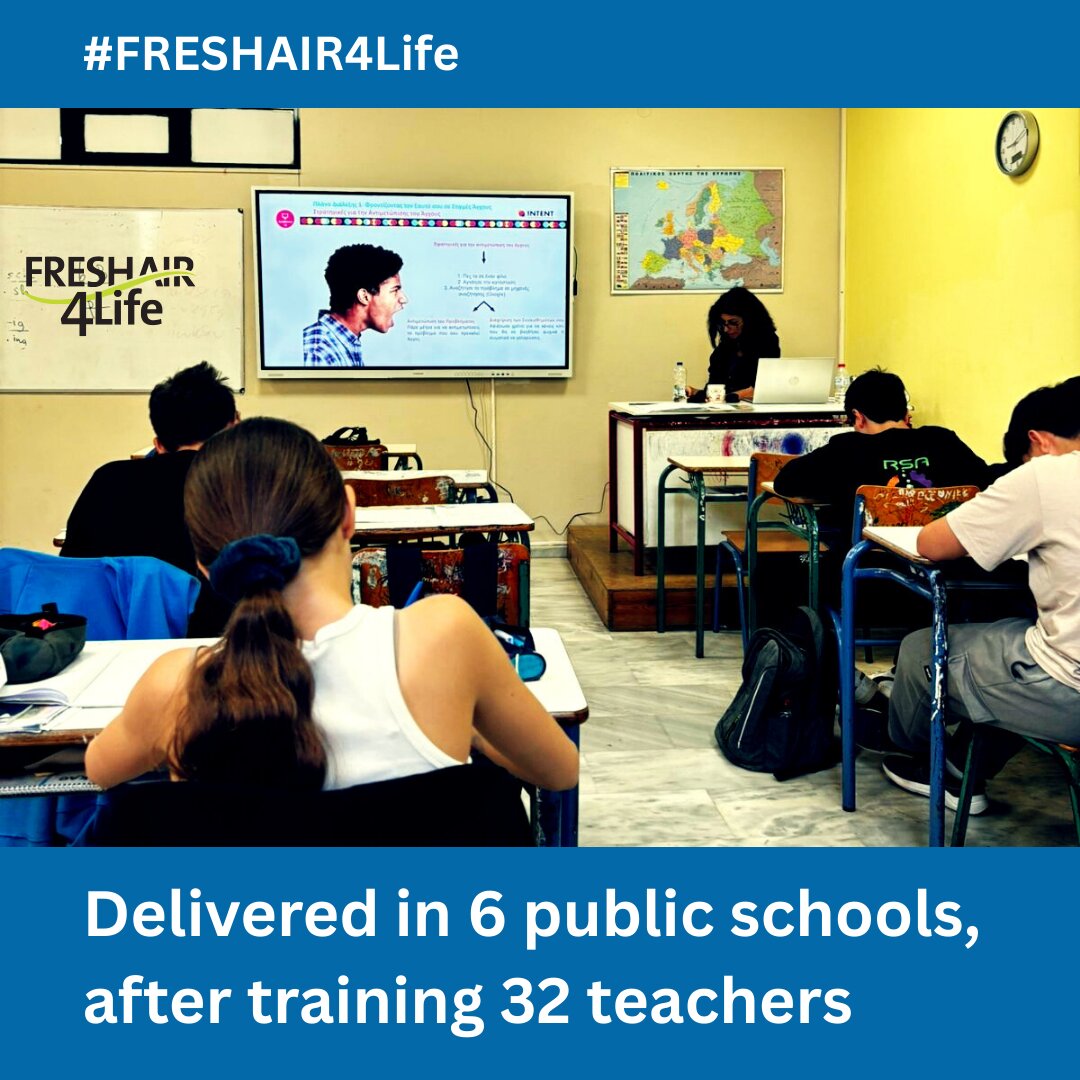
The intervention was implemented between March and May 2025 in six public schools across Heraklion, including three middle schools and three high schools, reaching nearly 1000 students during the Spring school term.
Turning intentions into action
At the core of the intervention was the use of implementation intentions, often described as “if–then” plans. Students were guided to create their own personal responses to common social situations involving tobacco. For example, if someone offered them a cigarette or vape, then they would already know what to say or do.
This approach moves beyond simply providing information about health risks and instead helps adolescents prepare for real-life peer pressure, a key factor in early tobacco use.
Strong collaboration with local education authorities
The programme was delivered in close partnership with the Secondary Education Directorate of the Prefecture of Heraklion and school headmasters, whose organisational support made it possible to integrate the sessions into school schedules.
Three national master trainers translated and adapted the UK INTENT materials for the Greek sociocultural context. Volunteer teachers from the six participating schools were then trained to deliver the sessions themselves. In total, 32 teachers took part in the training and went on to implement the intervention in their classrooms.
Through this teacher-led model, the programme potentially reached around 900 students, with 750 students completing questionnaires and receiving the full intervention directly from their teachers.
Shorter sessions tailored to local realities
While the original INTENT programme consists of eight one-hour sessions, the Greek adaptation was condensed into two sessions of approximately 90 minutes each. This made the programme more feasible within the constraints of school timetables while maintaining the core behavioural components.
The content was also enriched with local examples and culturally-relevant visuals and addressed emerging tobacco trends such as vaping and smokeless tobacco, which are currently among the main challenges in Greece according to project findings.
Positive early feedback from schools
The sessions were successfully delivered across all participating schools, with only minor challenges related to scheduling and time management.
Both teachers and students reported high levels of satisfaction and expressed interest in continuing to use the materials and integrating the programme into routine school activities. These early results suggest that the intervention is feasible, relevant and well accepted within the school environment.
Addressing a major public health concern
Tobacco use among adolescents remains a significant public health issue in Greece, particularly in Crete. In Greece the prevalence of smoking is higher compared to other European Union countries (GA, 2024). For example, the results of the second wave of Global Youth Tobacco Survey (Rachiotis et al., 2020) suggested that smoking prevalence is 10.1% at the age of 13-15 years, and 14% at the age group of 15 to 24 years (Eurostat, 2022). Therefore, preventing the initiation of smoking during adolescence is critical as early use is strongly linked to long-term addiction and increased risk of long-term diseases.
By giving students personalised refusal strategies, the intervention aimed to strengthen their confidence and ability to resist social pressure before tobacco use becomes established.
Impact beyond the classroom
The benefits of the programme extended beyond participating students. Teachers who received training shared knowledge with colleagues, parents and community members through posters and informal networks.
Students also became informal advocates for smoke-free lifestyles, discussing what they learned with friends and family members including parents and siblings. This peer and family-level diffusion helped reinforce anti-tobacco messages within the wider community.
Challenges and practical solutions
The main challenges during implementation were organisational, including identifying suitable times for sessions without disrupting academic schedules and managing lively classroom discussions within limited time.
These issues were addressed through flexible scheduling, close coordination with school leadership and practical adjustments to lesson pacing while maintaining student engagement.
Lessons for future programmes
Several key lessons emerged from the Greek experience. Early planning and coordination with schools are essential. Short refresher trainings for teachers could further strengthen confidence and consistency in delivery. Strong support from headmasters is critical to ensure sufficient time allocation. Ongoing feedback from teachers and students is invaluable for identifying challenges and making timely improvements.
Opportunities for future scale-up
To strengthen sustainability, future efforts could integrate the sessions into different school subjects, allowing the content to be reinforced across the curriculum. Tailoring activities to various classroom contexts may further increase relevance and student engagement.
With strong school partnerships and a teacher-led delivery model, the adapted INTENT intervention shows promise as a scalable approach to adolescent tobacco prevention within Greece’s education system.
Bravo! Sustainability Award
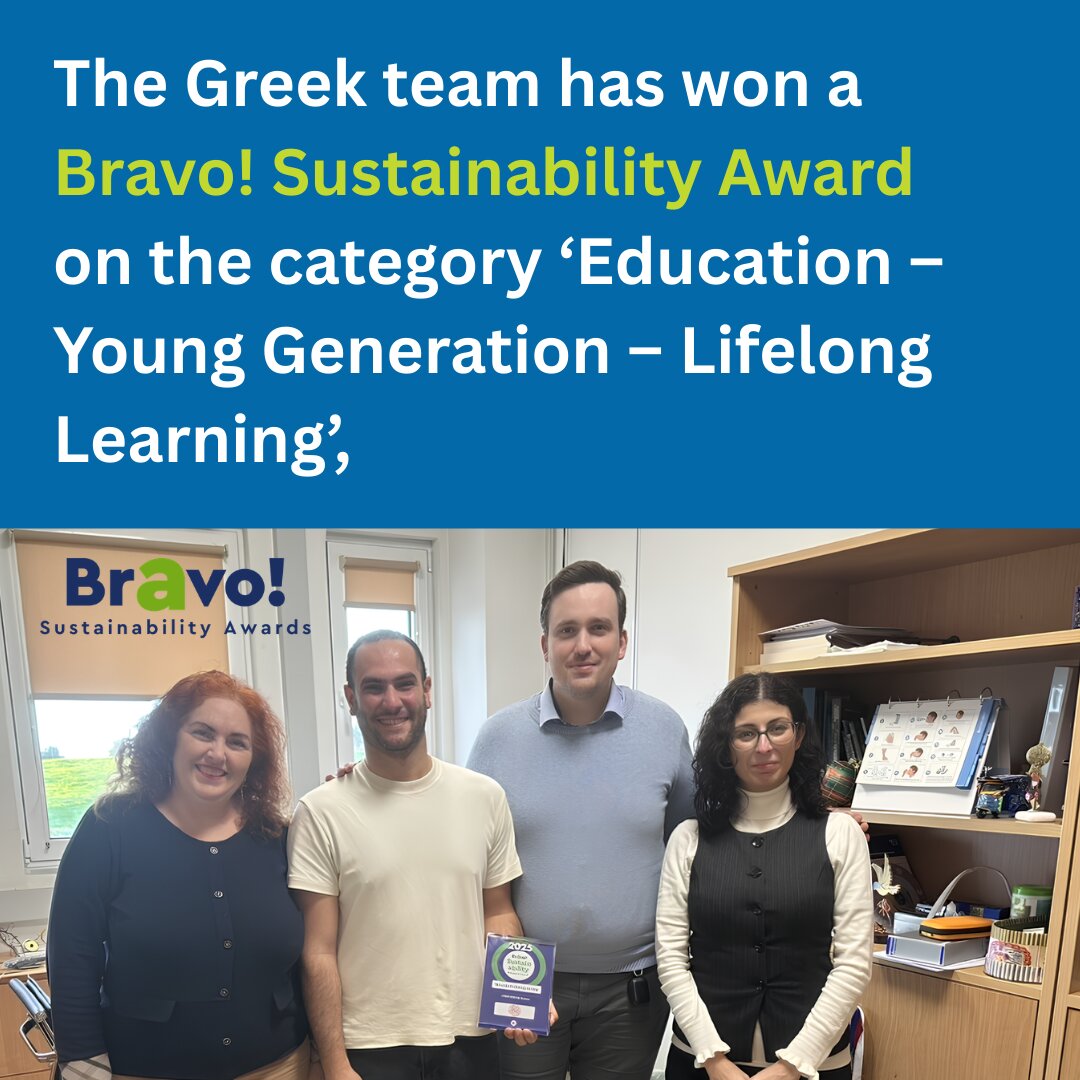
The work developed by the Greek team has been recognised with a Bravo! Sustainability Award in the thematic area ‘Education – Young Generation – Lifelong Learning’, highlighting the team’s innovative and impactful contribution to promoting sustainable development.